
Client: Confidential
Location: Central America
Technologies: TIFI® Targeted In-Furnace Injection
CASE STUDY
Improved combustion delivers visible environmental impact
The oil-fired facility experienced significant sulfur trioxide (SO₃) emissions, resulting in a visible blue plume.
To address this, Fuel Tech provided a solution for three oil-fired units, designed to improve combustion, reduce loss-on-ignition (LoI) and carbon particulates, and substantially lower SO₃ emissions to eliminate the acid plume. Additional objectives included minimizing cold-end corrosion and air heater fouling, while increasing overall boiler efficiency.
| Fuel Type | Heavy Oil #6 |
| Boiler Type / Size | 35 MW B&W and Mitsubishi Front Wall-Fired Unit |
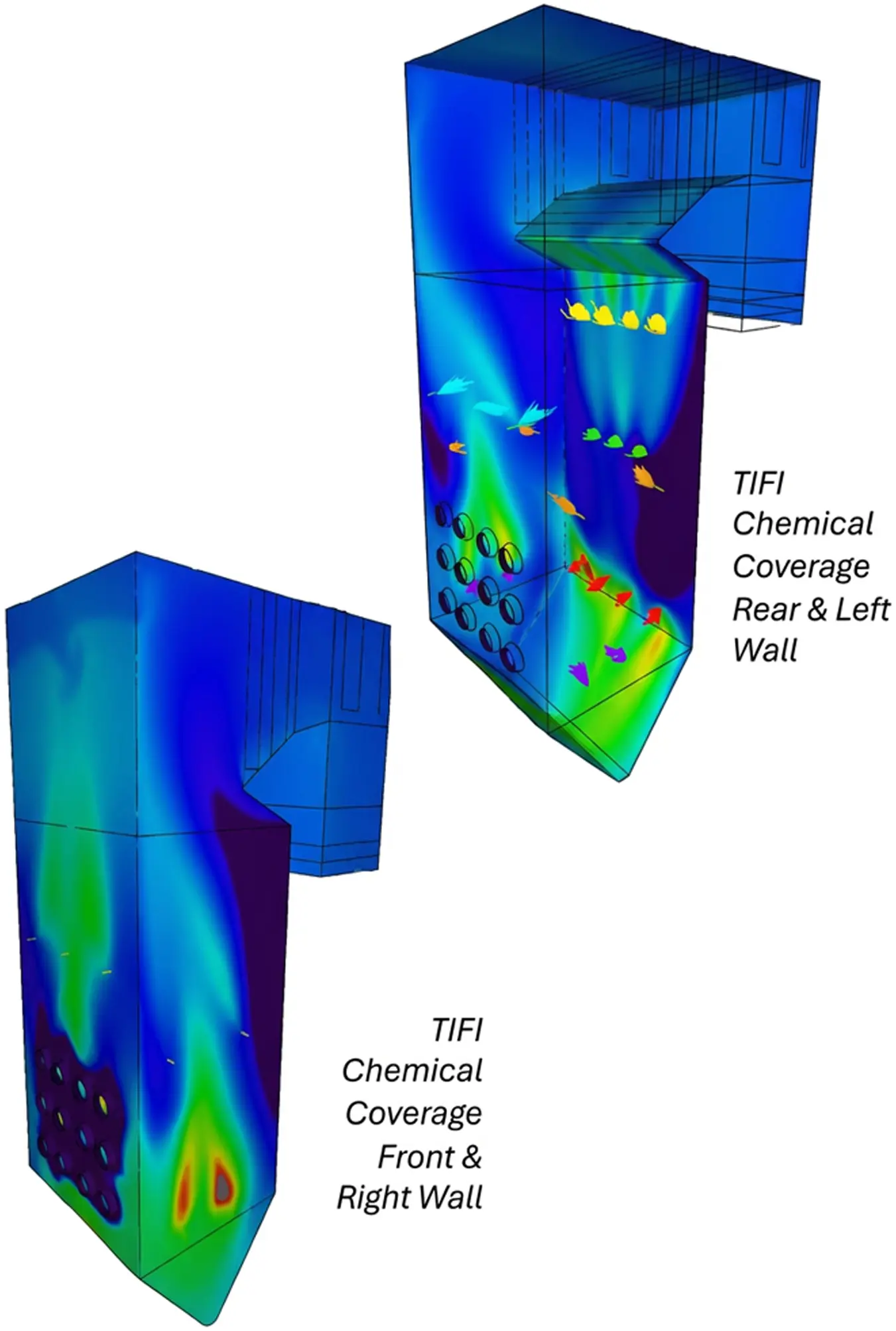
Fuel Tech used computational fluid dynamics (CFD) modeling to precisely identify problem areas within the boiler. An optimized chemical feed program was then implemented using TIFI, which involves injecting a magnesium hydroxide slurry diluted with water directly into targeted zones of the combustion unit.
The slurry’s micron-sized particles react with slag as it forms, penetrating existing deposits and altering the physical crystal characteristics to reduce slagging and SO₃ emissions. This highly reactive and stable reagent allows for effective treatment at lower dosages, enhancing SO₃ abatement performance while minimizing handling and feeding issues.
The project successfully achieved a greater than 75% reduction in SO₃ emissions, significantly mitigating the sulfuric acid plume using TIFI and lowering loss on ignition (LOI) levels. The LOI improvement was accomplished using a diluted solution of magnesium hydroxide and calcium nitrate injected into the fuel oil lines. Ash quality improved with an increase in pH to 6, contributing to better environmental outcomes.
Additionally, ash fallout in surrounding areas was eliminated, reducing environmental contamination and visual impact. These improvements also included a marked reduction in maintenance cleanup time, which helped decrease downtime and associated costs.
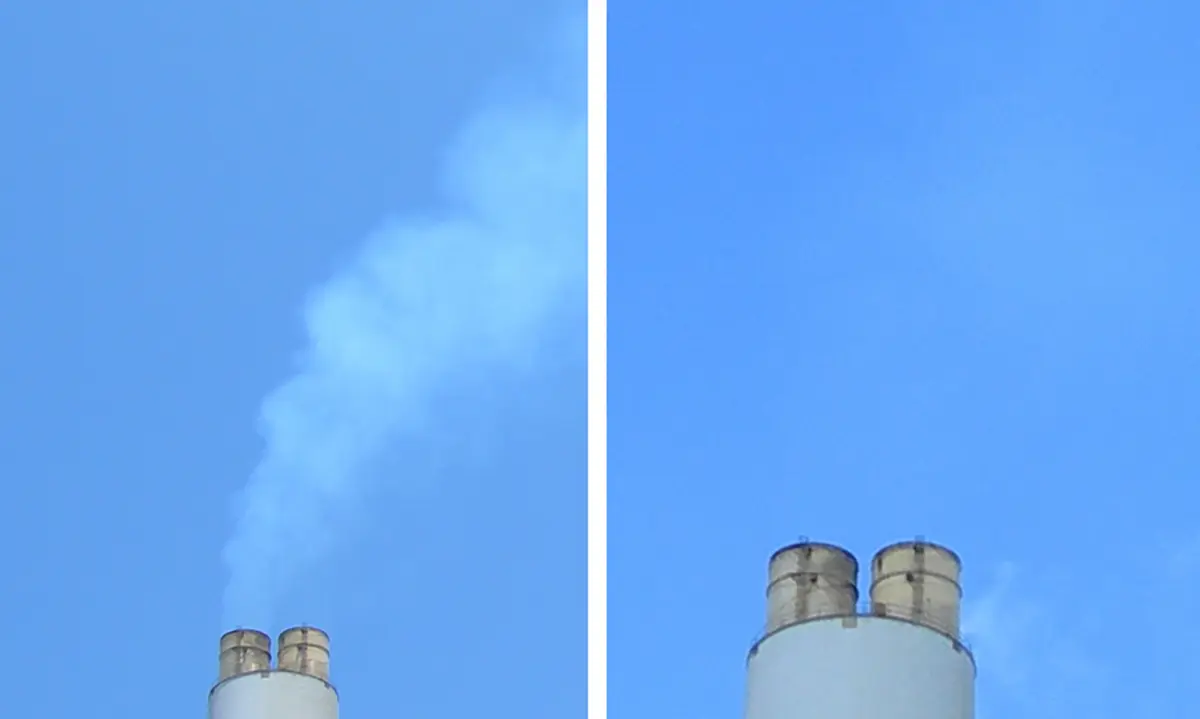
Plume: Before & after treatment