

Fuel Tech’s advanced modeling techniques and expertise are pivotal to our success in helping customers reach their desired performance levels. Our air pollution control, water treatment and chemical technologies all leverage modeling to optimize processes and applications for maximum effectiveness. We have been developing our computational engineering software for over 30 years and now offer a world-leading suite of sophisticated process modeling applications.
PARTS & SERVICES
Computational Fluid Dynamics (CFD) Modeling Services
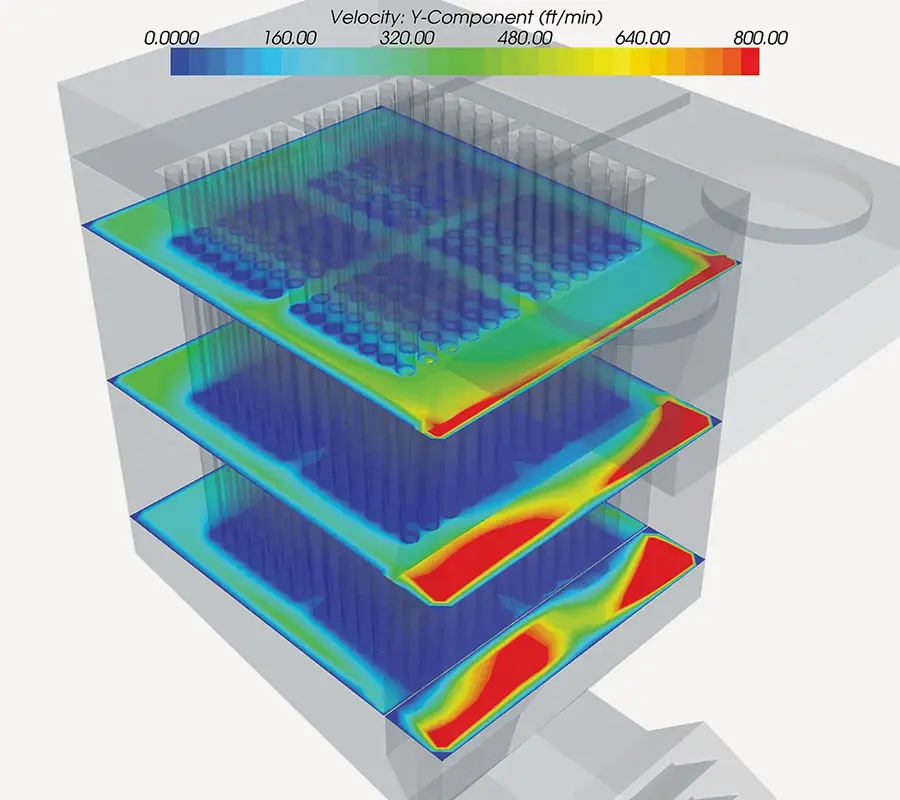
Utilizing custom process models to drive optimal outcomes
A custom process model is employed to simulate the operating conditions of our technologies, ensuring they perform at their highest potential. Computational Fluid Dynamics (CFD) modeling predicts key variables such as operating temperatures, velocities, and other factors based on a virtual replica of real-world geometry and operating inputs. For NOxOUT® and TIFI® Targeted In-Furnace Injection™ applications, the CFD model creates a 3D representation of the combustor or boiler. ULTRA® models simulate the geometry and dynamics of the urea decomposition chamber, including its integration with the customer’s ductwork.
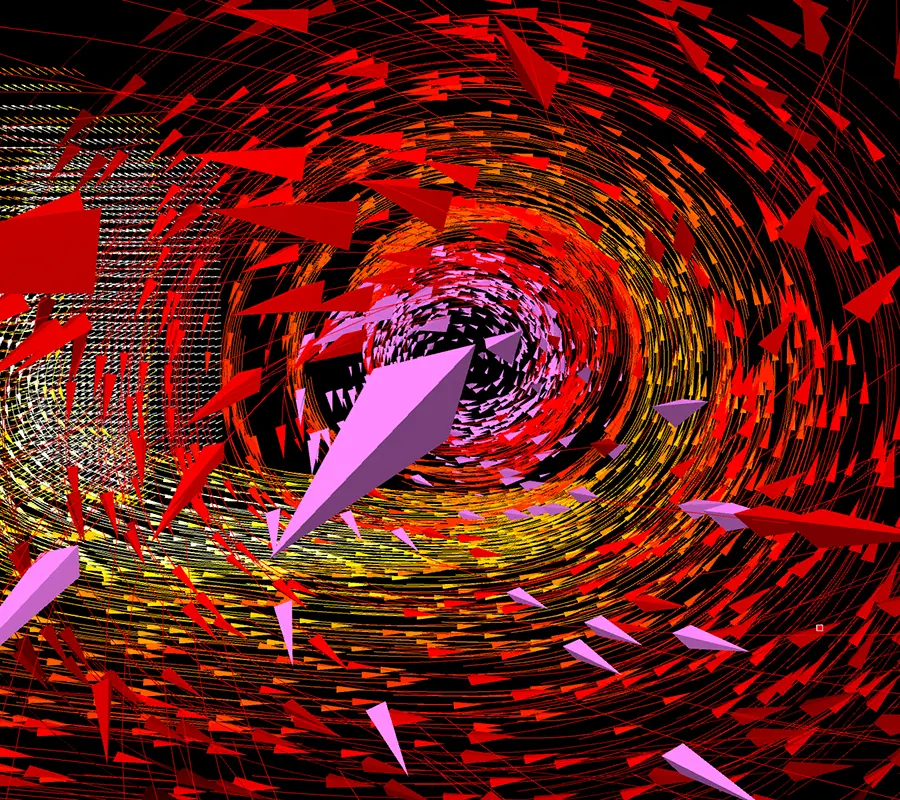
Visualized using proprietary visualization software
Fuel Tech’s visualization software is designed to demonstrate the complex behaviors of combustion flows, providing engineers with an in-depth understanding. Fuel Tech engineers can view models from any angle and revisit them throughout the design process. Additionally, our visualization software is used to engage customers during the design phase, enabling collaboration with their in-house plant experts to incorporate valuable onsite insights.
Chemical kinetics modeling
Fuel Tech’s advanced chemical kinetics modeling (CKM) enables precise predictions of chemical reaction progress, ensuring optimal performance outcomes. For instance, in our nitrogen oxides reduction applications, CKM simulates key chemical reactions based on gas temperature profiles from CFD models, factoring in anticipated chemical dosages and critical flue gas compositions.
Additionally, Fuel Tech has developed specialized chemical spray models tailored to boiler and duct conditions. These spray models are integrated with predicted CFD velocities and temperatures to forecast droplet evaporation and chemical distribution. Using our visualization software, Fuel Tech engineers can dynamically reposition sprays and assess their impact on performance. By simulating spray injection within the original CFD model, we achieve a more accurate mapping of chemical performance.
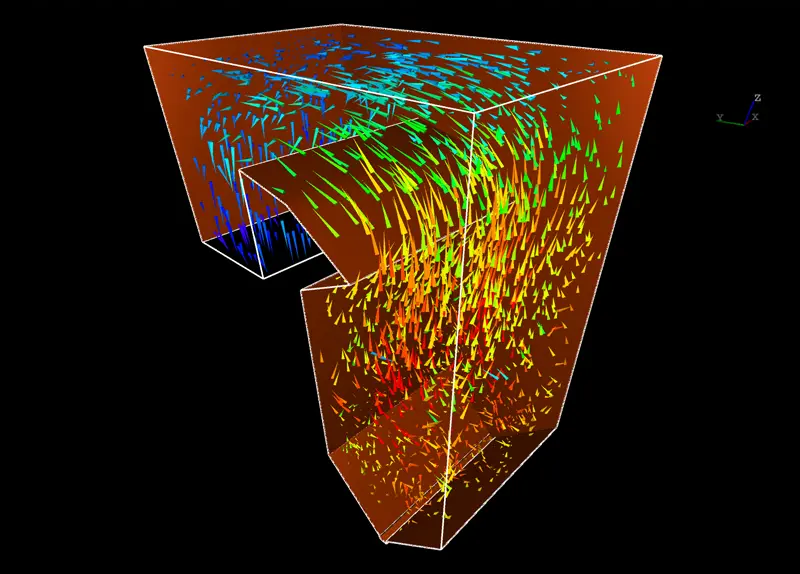
A typical TIFI or NOxOUT boiler CFD model predicts gas flow characteristics.
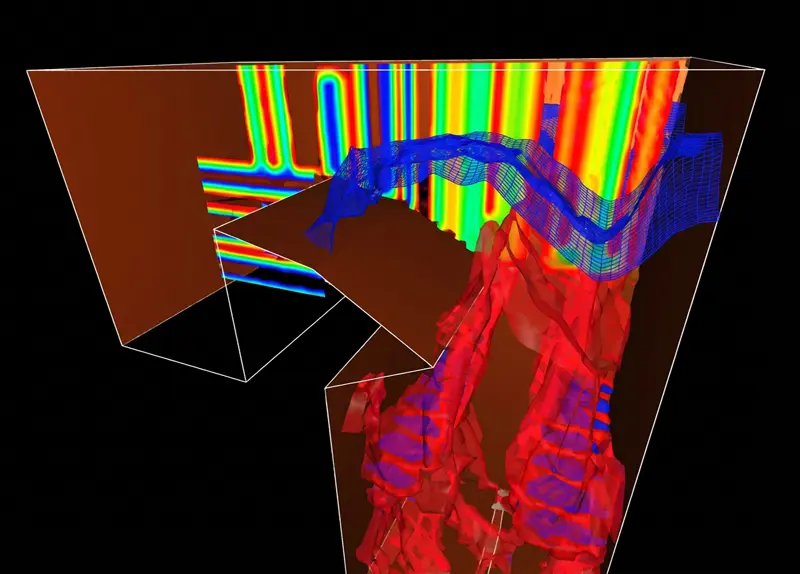
Temperature surfaces are used to identify important zones for chemical injection.
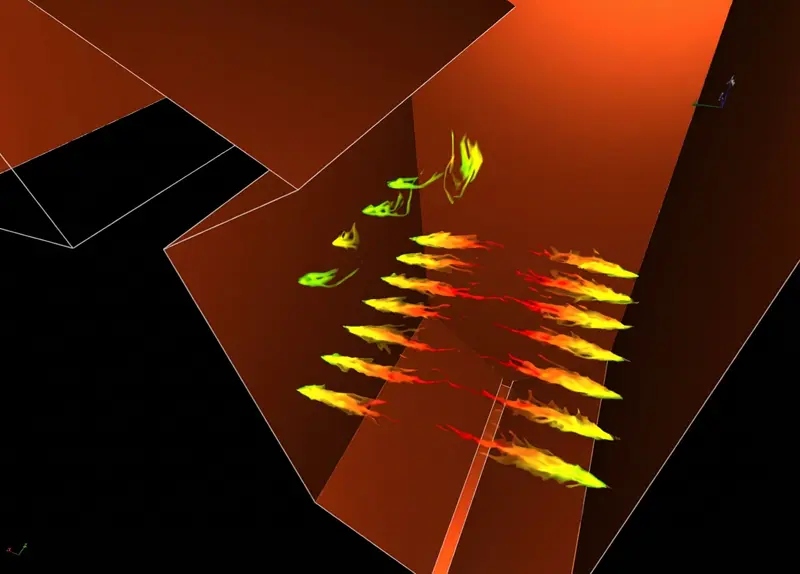
Injector arrays are screened in a virtual visualization environment.
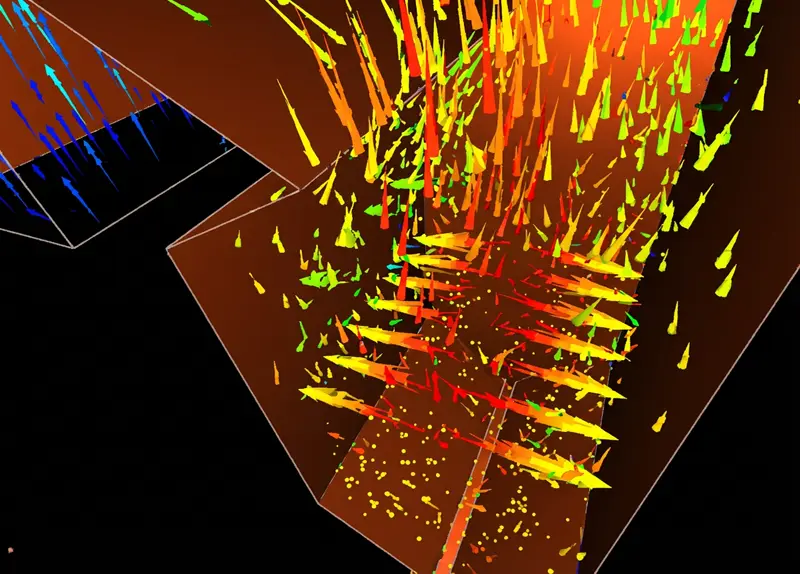
Candidate spray solutions are simulated with additional CFD modeling.
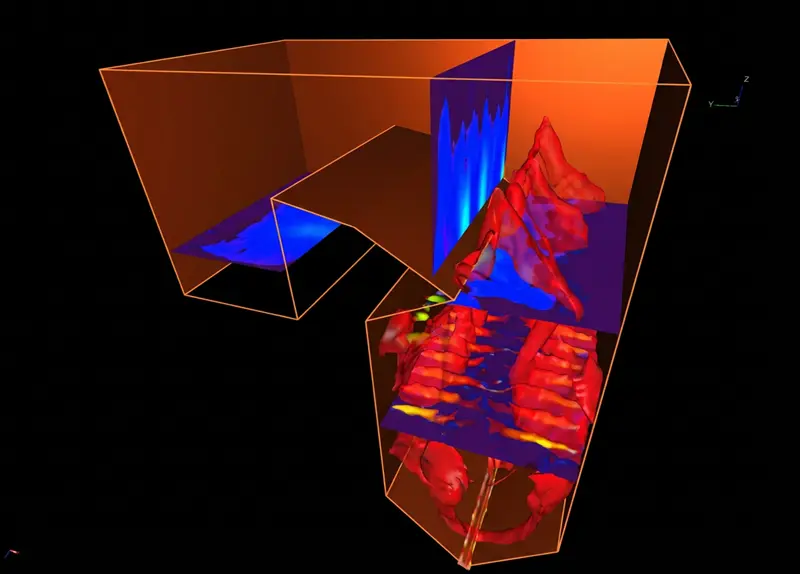
Chemical distribution planes are generated from the CFD model to predict performance.
Supporting our customers through advanced modeling solutions
Contact Fuel Tech today to learn how our world-class computational fluid dynamics expertise can optimize your process performance.