
Client: University of Texas, Austin
Location: Austin, Texas, US
Technologies: ULTRA® system
CASE STUDY
On-site ammonia storage eliminated for CHP plant
A combined heat and power (CHP) plant at the University of Texas, Austin required a safe and reliable solution for onsite ammonia generation to support their selective catalytic reduction (SCR) system. Due to space constraints and the presence of over 50,000 students on campus, safety was a top priority. Fuel Tech’s ULTRA® system was selected as the optimal choice, converting urea into ammonia on demand and eliminating the need for hazardous ammonia storage, which significantly reduced risk.
| Fuel Type | Natural Gas |
| Boiler Type / Size | Turbine-fired with Heat Recovery System Generator (HRSG) 32.5 MW capacity |
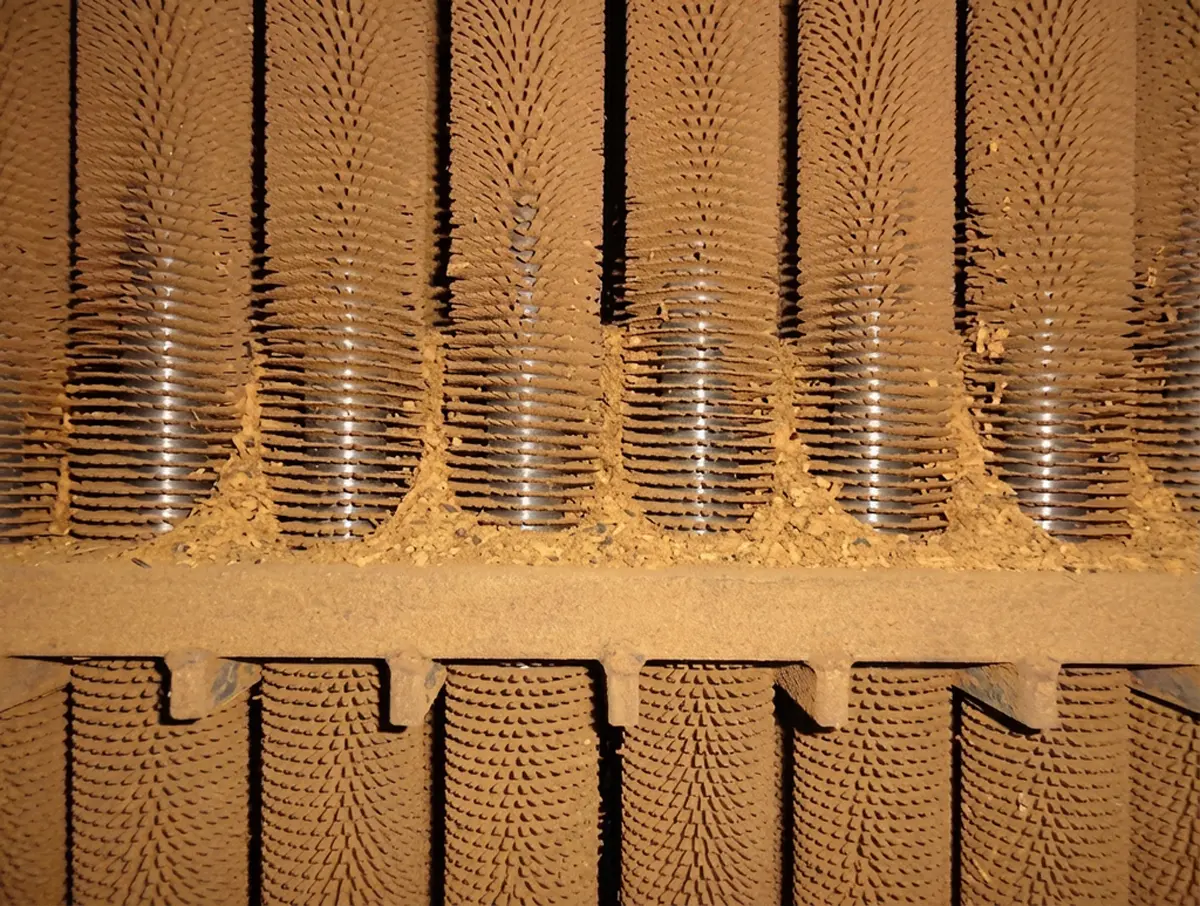
The system experienced deposits primarily composed of ammonium bisulfate, which formed at around 400°F. These deposits led to unexpected corrosion, as they reacted with tube material to form iron sulfate. Initially, there was uncertainty about the source of the sulfur contributing to these reactions.
After investigation, the most likely cause was identified as cooling tower drift, where sulfuric acid used for pH control introduced sulfur compounds into the system.
Fuel Tech designed and supplied an ammonia generation system with the capability to handle both 40% and 32% concentrations. The system was engineered for a maximum ammonia output of 24.7lb NH₃/h and a minimum of 2.47lb NH₃/hour.
Key components included an 8,000 gallon fiberglass-reinforced plastic (FRP) concentrated urea storage tank, two 100% dilution air blowers, a metering and distribution module, a natural gas burner, and a 20 foot high decomposition chamber, with 24-inch diameter. Two urea injectors delivered precise dosing, all managed through a ControlLogix PLC control system. Fuel Tech also provided full construction, startup, and optimization support to ensure seamless system integration and performance.
The ULTRA® system proved to be the safest and most effective alternative to traditional ammonia use on the University of Texas campus. It successfully met all ammonia delivery performance and turndown requirements while operating within the site’s strict space constraints.
The system’s compact design allowed for installation within a limited footprint, making it well-suited for the dense urban setting. In addition to its safety and operational benefits, the solution offered a competitive economic advantage, delivering long-term value without compromising reliability or compliance.